Sealing is one of the most overlooked steps in paver maintenance, and it’s also one of the most impactful. Rancho Cucamonga Pavers provides professional paver sealing throughout Rancho Cucamonga, CA, protecting your patio, driveway, walkway, or pool deck from sun damage, stains, and the gradual wear that comes with years of use in Southern California’s intense, sun-heavy climate.
Why Paver Sealing Matters Here
Unsealed pavers are porous, which means they absorb whatever comes into contact with them — oil drips in the driveway, sunscreen and pool chemicals around the pool deck, dirt and organic debris that leads to mold and mildew growth in shaded areas. Over time, that absorption leads to staining that’s difficult or impossible to fully clean out.
The sun exposure here adds another layer to the problem. Constant UV exposure gradually fades unsealed pavers, especially darker colors, leaving them looking chalky and washed out compared to how they looked when they were first installed. Sealing creates a protective barrier that significantly slows this fading process, keeping your pavers looking closer to their original color for years longer than they would unsealed.
What Paver Sealing Actually Does
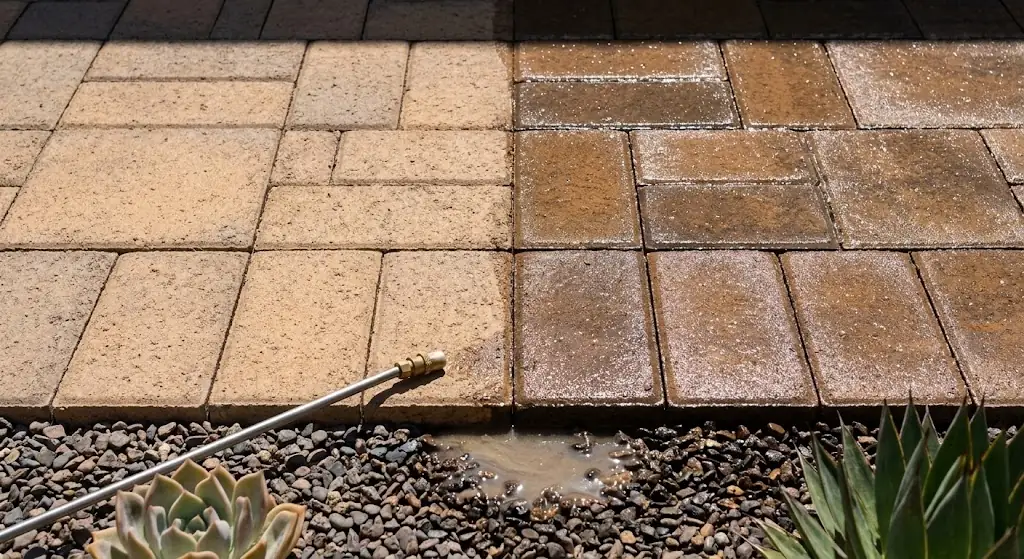
Enhances color and appearance. Most sealers deepen and enrich the natural color of your pavers, giving them a richer, more finished look than the unsealed surface. Some sealers add a subtle sheen, while others are formulated for a natural, matte finish, depending on the look you’re going for.
Protects against stains. A sealed surface is far more resistant to oil, grease, sunscreen, and general staining because liquids sit on top of the seal instead of soaking into the paver itself, giving you time to wipe them up before they set in.
Slows UV fading. Sealers with UV inhibitors help protect against the sun bleaching and chalking that unsealed pavers experience over time in a climate with as much year-round sun exposure as ours.
Locks joint sand in place. Sealing helps stabilize polymeric sand in the paver joints, reducing erosion from irrigation, rain, and regular foot or vehicle traffic, and making it harder for weeds and ants to work their way in.
Reduces mold and mildew. In shaded or frequently damp areas, like a north-facing walkway or a pool deck, sealing makes it significantly harder for mold, mildew, and algae to take hold on the surface.
Sealer Options: Matching the Finish to the Application
Not every paver surface calls for the same sealer, and we help you choose based on how the surface is actually used:
Matte/natural finish sealers are popular for driveways and walkways where homeowners want the protective benefits without a glossy, noticeably “sealed” look.
Wet-look/gloss sealers deepen color saturation dramatically and are a popular choice for patios and pool decks where homeowners want a richer, more vibrant finished appearance.
Slip-resistant additive sealers are especially important for pool decks and any surface that regularly gets wet, since a standard gloss sealer can make an already-wet surface more slippery if it isn’t formulated with anti-slip additives.
Our Sealing Process
Surface cleaning. Before any sealer goes down, the entire surface is thoroughly cleaned to remove dirt, algae, efflorescence, and old degraded sealer, since sealing over a dirty surface just traps the problem underneath.
Joint sand inspection and repair. We check the condition of the polymeric sand in the joints and re-sand any areas where it’s eroded or washed out before sealing, since sealing over compromised joints doesn’t fix the underlying issue.
Drying time. Pavers need to be fully dry before sealing, since trapped moisture underneath a sealed surface can cause discoloration or efflorescence to develop beneath the seal.
Sealer application. Sealer is applied evenly in thin coats, using the appropriate application method for the specific product and surface, avoiding puddling or streaking that can leave an uneven finish.
Cure time. We’ll walk you through the appropriate cure time before the surface is ready for foot or vehicle traffic, which varies depending on the sealer used and current weather conditions.
How Often Should You Reseal?
Depending on the sealer used, sun exposure, and how much traffic the surface gets, most paver sealing lasts somewhere in the range of two to five years before it starts to wear thin and needs to be reapplied. High-traffic driveways and sun-exposed pool decks in Rancho Cucamonga, CA typically need resealing closer to the shorter end of that range, given the intensity and consistency of the sun exposure here.
Get a Free Sealing Estimate
Whether your pavers were installed by us or someone else, and whether you’re sealing for the first time or it’s time to reseal, contact us for a free evaluation and quote. We’ll assess your surface’s condition and recommend the right sealer for how you actually use the space.